
Home Loan Prepayment: Cut the EMI or the Tenure?
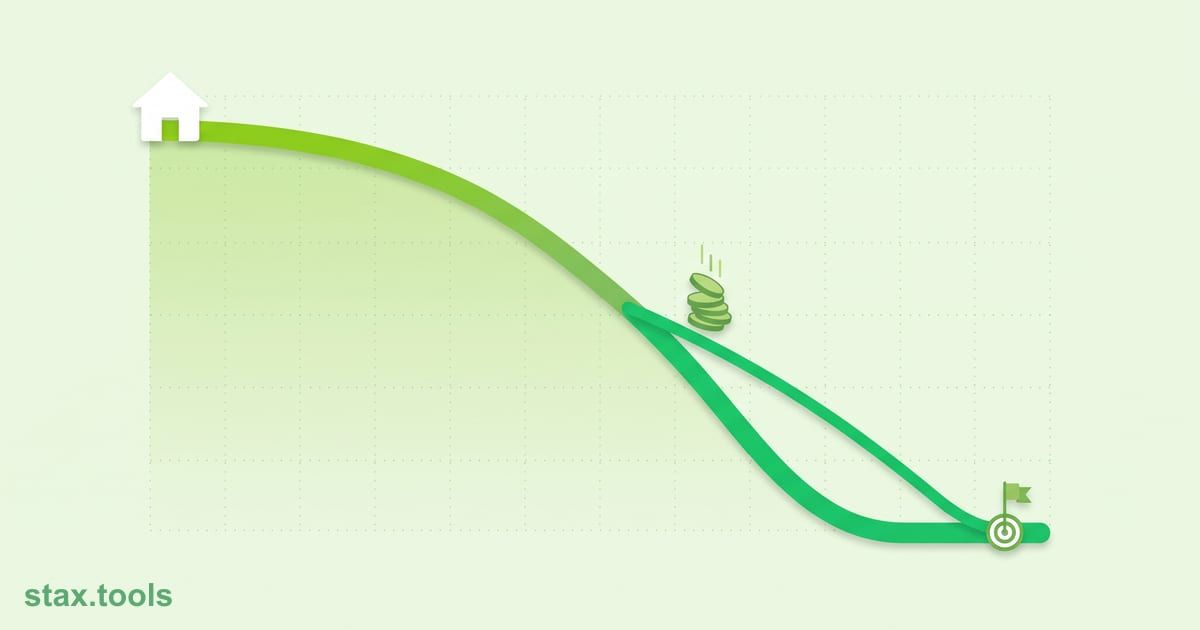
Home loan prepayment of ₹5 lakh on a ₹50 lakh loan: a shorter tenure saves ₹13.3 lakh of interest, a lower EMI ₹4.5 lakh. Why, and when to pick each.

Disclaimer: This article is for educational purposes only and does not constitute financial advice. The author is not a SEBI-registered advisor or certified financial planner. Please consult a qualified professional before making any investment or tax decisions.
This article is general information about how home loan prepayment works in India. It is not financial, tax or legal advice. The figures are our own calculations from stated assumptions; your loan statement and your lender's terms are what count.
You have ₹5 lakh you did not expect: a bonus, a maturing FD, money from family. You put it into your home loan, and the bank asks a question you may not have thought about. Should it lower your EMI, or keep the EMI the same and close the loan sooner?
Most people answer on instinct. A smaller EMI feels like relief every month. A shorter loan feels distant. This post works through one realistic case with real numbers, shows why the two choices end up so far apart, and gives a short way to decide for your own loan. Every rupee figure below was computed by a script that uses the same arithmetic as our Loan Prepayment Calculator, so you can reproduce it there.
The scenario: Meera's ₹50 lakh home loan
Meera is an invented borrower, but her numbers are typical. She took a ₹50 lakh home loan for 20 years (240 months) at a floating rate of 8.5% a year. Her EMI, from the standard reducing-balance formula, is ₹43,391. If nothing changes, she will pay ₹54,13,879 of interest over the life of the loan, more than the amount she borrowed.
Almost three years in, she has ₹5 lakh to prepay. She makes the payment at the start of month 36, when her outstanding balance is ₹46,84,510. After the part-payment, the balance drops to ₹41,84,510.
The 8.5% rate is an assumption for the example, not a quote. Rates move with the RBI repo rate and with your lender's spread; our post on home loan interest rates covers how they have moved this year. Further down we show how the answer changes at 7.5% and 9.5%.
Option 1: Keep the EMI, shorten the tenure
Meera keeps paying ₹43,391 a month. Because the balance is now lower, more of each EMI goes to principal, and the loan ends early.
- The loan now ends in month 198 instead of month 240: 42 months (3.5 years) earlier. The last payment is a part EMI of about ₹35,049.
- Total interest over the loan falls from ₹54,13,879 to ₹40,83,108.
- Interest saved: ₹13,30,771, on a ₹5 lakh prepayment.
We checked the 198-month result with the closed-form formula for the number of payments left: after the prepayment, 162.81 payments remain, so the 163rd payment, in month 198, is the last one.
Option 2: Keep the tenure, lower the EMI
Meera asks the bank to keep the original end date and recalculate the EMI on the new balance for the 205 months that are left.
- Her EMI drops from ₹43,391 to ₹38,760: ₹4,631 a month less.
- The loan still ends in month 240.
- Total interest falls to ₹49,64,453.
- Interest saved: ₹4,49,426.
Side by side
| Meera's ₹5 lakh at month 36 | Keep EMI, cut tenure | Keep tenure, cut EMI |
|---|---|---|
| EMI after prepayment | ₹43,391 | ₹38,760 |
| Loan ends in month | 198 (42 months early) | 240 (unchanged) |
| Total interest over the loan | ₹40,83,108 | ₹49,64,453 |
| Interest saved vs no prepayment | ₹13,30,771 | ₹4,49,426 |
| Total paid from month 36 onward | ₹70,64,418 | ₹79,45,762 |
Our calculation: ₹50 lakh, 8.5% a year, 240 months, ₹5 lakh paid at the start of month 36, rate unchanged for the whole loan, no fees. Amounts rounded to the nearest rupee.
The same ₹5 lakh, paid on the same day, saves almost three times as much interest when it shortens the loan. The gap between the two options is ₹8,81,345 of extra interest.
Why the gap is so large
Both options cut the balance by the same ₹5 lakh, so the interest charged in month 36 is the same either way. The difference is what happens next.
In option 1 Meera keeps paying ₹43,391. The interest on the smaller balance is lower, so a larger share of every EMI repays principal, which lowers next month's interest a little more, and so on. That compounding works in her favour every month for the rest of the loan.
In option 2 the bank spreads the smaller balance over the same 205 months. The principal falls only as fast as the new, lower EMI allows, so for years the balance stays higher than in option 1, and interest is charged on that higher balance.
There is a neater way to see it. Compare the two payment streams from month 36. From month 36 to month 197, option 2 leaves Meera with ₹4,631 more each month. Then option 1 ends with a part payment in month 198, while option 2 still asks for ₹38,760 a month until month 240. We solved for the interest rate at which those two streams are worth the same, and it came out at exactly 8.5% a year, the loan rate.
In plain terms: choosing the lower EMI is the same as borrowing ₹4,631 a month from the bank at your home loan rate. Sometimes that is a sensible thing to do. It is never free.
How the timing changes the result
The earlier you prepay, the more interest the ₹5 lakh saves, because more years of interest are still ahead of it. Here is the same ₹5 lakh at five points in Meera's loan:
| Prepay ₹5 lakh at month | Balance just before | Saved: cut tenure | Months saved | Saved: cut EMI | New EMI |
|---|---|---|---|---|---|
| 12 | ₹49,09,107 | ₹16,16,308 | 48 | ₹5,12,055 | ₹38,972 |
| 36 | ₹46,84,510 | ₹13,30,771 | 42 | ₹4,49,426 | ₹38,760 |
| 60 | ₹44,18,453 | ₹10,78,939 | 36 | ₹3,88,750 | ₹38,481 |
| 120 | ₹35,18,162 | ₹5,78,356 | 24 | ₹2,46,175 | ₹37,224 |
| 180 | ₹21,43,147 | ₹2,27,013 | 16 | ₹1,17,517 | ₹33,268 |
Our calculation, same loan and assumptions as above.
Two things stand out. First, a prepayment in year 1 saves more than seven times as much interest as the same amount in year 15. Second, at every point, cutting the tenure saves more than cutting the EMI, between about 1.9 and 3.2 times as much. If you are going to prepay, sooner is better, and the tenure option is the one that makes the money work hardest.
How the interest rate changes the result
A higher rate makes every rupee of prepayment more valuable, because each rupee of balance you remove was costing more.
| Rate (₹5 lakh at month 36) | Original EMI | Saved: cut tenure | Months saved | Saved: cut EMI | New EMI |
|---|---|---|---|---|---|
| 7.5% | ₹40,280 | ₹10,87,163 | 39 | ₹3,88,276 | ₹35,947 |
| 8.5% | ₹43,391 | ₹13,30,771 | 42 | ₹4,49,426 | ₹38,760 |
| 9.5% | ₹46,607 | ₹16,04,364 | 45 | ₹5,12,535 | ₹41,667 |
Our calculation: ₹50 lakh, 240 months, rate fixed at the value shown for the whole loan.
A floating rate will not stay fixed for 20 years, so treat these as "what if the rate were this from now on" figures. If your rate has gone up since you borrowed, our Rate Hike EMI Calculator shows what the increase does to your EMI or tenure on its own.
Will the bank charge a prepayment penalty?
For most home loans taken by individuals at a floating rate, no.
- From May 2014, an RBI circular barred scheduled commercial banks (other than regional rural banks) from charging foreclosure charges or prepayment penalties on floating-rate term loans to individual borrowers (RBI circular of 7 May 2014). It built on a June 2012 circular that covered home loans. Both circulars are in the list of instructions that the 2025 Directions below repeal from their effective date, so the newer text is the one to read today.
- The Reserve Bank of India (Pre-payment Charges on Loans) Directions, 2025, dated 2 July 2025, widen this. For loans sanctioned or renewed on or after 1 January 2026, banks, co-operative banks, NBFCs and all-India financial institutions may not levy prepayment charges on floating-rate loans to individuals for non-business purposes, whatever the source of the money and with no minimum lock-in period. The PTI report on the Directions, as published by The Week on 2 July 2025, also notes the business-loan rules for individuals and small businesses.
- The Directions also say that whether prepayment charges apply must be disclosed in the sanction letter, the loan agreement and, where one is required, the Key Facts Statement, and that a charge not disclosed that way cannot be levied.
Fixed-rate loans, and floating-rate loans from a housing finance company or NBFC sanctioned before 2026, may follow different rules. Read your sanction letter, or ask the lender in writing before you pay.
Home loan prepayment: how to decide in four questions
- Is your emergency fund intact after the prepayment? Money in a home loan is hard to get back. If paying ₹5 lakh leaves you with no cushion for six months of expenses, keep some of it aside first.
- Is the EMI a strain today? If it is, the lower EMI buys breathing room, and that can be worth its cost. Option 2 is the right answer when cash flow, not interest, is the real problem.
- Would the freed-up money earn more than the loan costs? Our calculation shows the lower EMI costs your loan rate. Money kept back is only "ahead" if it reliably earns more than that after tax, which is not a given. We are not recommending any investment here.
- Does the interest deduction matter to you? If you file under the old tax regime and claim the home loan interest deduction, less interest also means a smaller deduction. Whether that changes the answer depends on your income and regime, so check it with the Income Tax Calculator or a chartered accountant.
If the answers are "yes, no, no, no", shortening the tenure is usually the better use of the money.
How to run your own numbers
- Open the Loan Prepayment Calculator and enter your loan amount, annual rate and tenure in years. It shows the EMI it works out.
- Enter the prepayment amount and the month in which you will pay it, counted from the start of the loan.
- Choose Reduce tenure (same EMI), note the interest saved and months saved, then switch to Reduce EMI (same tenure) and note the new EMI and interest saved.
- To compare your loan with a refinance offer or a second lender, use the EMI Comparison Calculator. To see what a different loan amount or tenure does to the EMI, the Home Loan EMI Calculator is quicker.
A few limits of the tool you should know. It applies the prepayment at the start of the chosen month, uses one fixed rate for the whole loan, and does not add fees, insurance or a rate change. Your bank's statement will differ by small amounts because of how it rounds the EMI, the exact date the money is credited, and any rate resets.
Common mistakes
- Letting the bank pick the option for you. Ask which one it will apply, and say which you want, in writing if possible.
- Prepaying late in the loan "to close it". In year 15 of a 20-year loan, most of the interest is already paid. The money may do more good elsewhere.
- Emptying the emergency fund. A home loan cannot be quickly "un-prepaid" if you lose income next month.
- Assuming a penalty applies. For floating-rate home loans to individuals, it usually does not. Check before you let it stop you.
Sources and methodology
- Reserve Bank of India (Pre-payment Charges on Loans) Directions, 2025, RBI/2025-26/64, 2 July 2025, read on 9 November 2026 and again on 20 November 2026: applicability to loans sanctioned or renewed from 1 January 2026, no prepayment charges on floating-rate non-business loans to individuals, no lock-in, disclosure in the sanction letter, loan agreement and KFS.
- RBI circular RBI/2013-14/582, 7 May 2014, read on 9 November 2026: no foreclosure charges or prepayment penalties on floating-rate term loans to individual borrowers at scheduled commercial banks other than RRBs; refers to the 5 June 2012 home-loan circular; listed as repealed in the Annex of the 2025 Directions (re-read on 20 November 2026).
- PTI via The Week, "RBI directs banks, other lenders not to levy pre-payment charges...", 2 July 2025.
- Method: every figure was computed by a script that reproduces the reducing-balance schedule, EMI formula and prepayment logic of our Loan Prepayment Calculator (prepayment applied at the start of the chosen month; for "reduce EMI", the EMI is recalculated over the months left to the original end). Checks: total interest without prepayment equals 240 EMIs minus the principal; the 198-month result matches the closed-form count of remaining payments (162.81); and the rate at which the two payment streams are worth the same was found numerically to be 8.5% a year. The borrower and the 8.5% rate are illustrative. Amounts are rounded to the nearest rupee.
Last reviewed: 2026-11-09. Rates, rules and your lender's terms change; confirm the details for your own loan with your lender.
Grishma covers Indian markets and personal finance for Stax Tools. She tracks RBI policy, household budgets, and investment math for working Indian families.
Grishma
Finance Content Writer
Grishma writes about personal finance, investing, and tax planning for Indian readers — translating complex regulatory changes into clear, actionable guidance.
More by Grishma →Tools mentioned in this article
- Loan Prepayment Calculator
Calculate interest saved and months reduced by prepaying your home loan. Compare reducing EMI vs reducing tenure.
- Home Loan EMI Calculator
Calculate home loan EMI, total interest, and principal-to-interest split. Pre-set with typical Indian home loan defaults.
- EMI Comparison Calculator
Compare two loans side by side — see which gives lower EMI, total interest, and total repayment.
- Rate Hike EMI Calculator: Repo Rate Change Impact
See how a repo rate hike or cut changes your home loan EMI or tenure, with an optional prepayment. Compare a higher EMI against a longer loan.
Related reading
 Advance Tax Due 15 December: Who Pays and How MuchAdvance tax 15 December deadline: who must have paid 75% of the year's tax by then, how to work out your figure, and what a missed instalment costs.9 min read
 CTC vs In-Hand Salary: Why Your Take-Home Is LowerCTC vs in-hand salary: see where ₹8, ₹15 and ₹30 lakh CTC go in PF, tax and gratuity, with FY 2026-27 monthly figures from our calculators.12 min read
 Missed the ITR Deadline? What a Belated Return CostsMissed July 31? You can still file a belated ITR for AY2026-27 until December 31, 2026. The late fee, interest, old-regime lock-out and the exact steps to file.8 min read
 FD vs RD vs Savings Account: Which to Use in 2026FD vs RD vs savings account in India: current bank rates, TDS rules, tax treatment, liquidity, and the right instrument for each financial goal.8 min read
Found this useful?
Browse 300+ free privacy-first tools — no login, no uploads, instant results.